Poker Table Position Explained: How Seat Order Shapes Each Decision
In poker, the same hand can call for different decisions depending on where you sit relative to the dealer button. Position does not change the cards you hold; it changes who must act before you and what you can learn from their choices. Understanding that order helps you make more deliberate decisions instead of treating every seat the same.
What poker position means
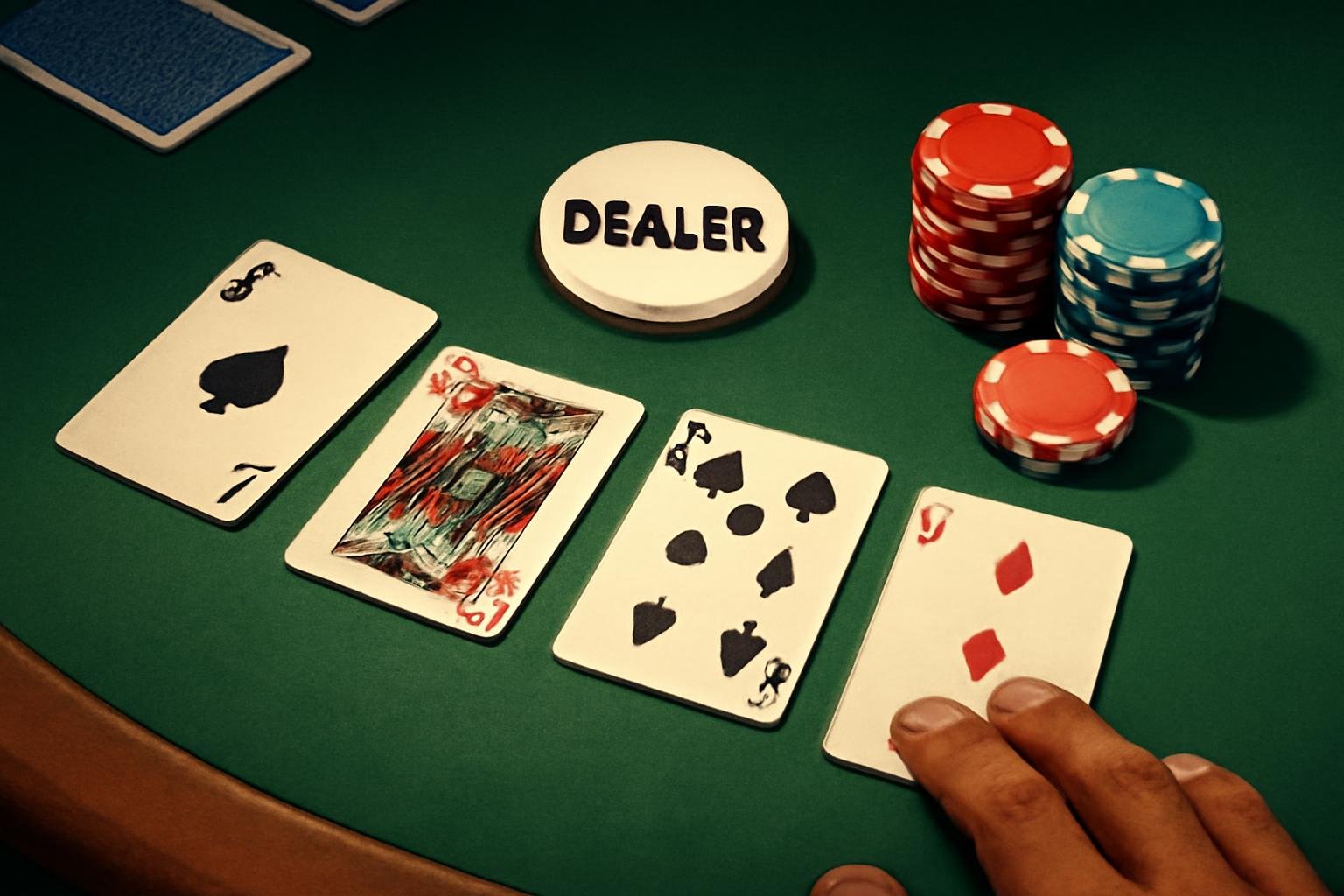
The dealer button marks the nominal dealer for the hand and moves one seat clockwise after each deal. In most common poker formats, players act in a set order rather than choosing when to take a turn. Your position describes where you are in that order, especially in relation to the button and the blinds.
In a standard game, the small blind and big blind post forced bets before the cards are dealt. Before the flop, action begins with the first player to the left of the big blind. After the flop, action generally begins with the first active player to the left of the button. Table rules and poker variants can differ, so check them before playing.
Early, middle, and late position
Early position: fewer decisions to observe
Players who act near the start of a betting round have little information about what the rest of the table will do. They may face a raise, a call, or a re-raise after they act. This uncertainty matters: a hand that seems attractive in isolation can become awkward if several players still have a chance to increase the price or enter the pot.
For example, imagine you hold a modest pair and are among the first to act before the flop. If you enter the pot, several players behind you can respond. The key question is not just “Is this a playable hand?” but also “What might happen after I act?”
Middle position: some information, some players behind
From the middle seats, you have seen the earliest players act, but you still need to account for those who have not yet acted. A fold by an early player gives you one piece of information; it does not mean the remaining players are unlikely to raise or call.
Keep track of both sides of the action: who has already entered the pot and how many players can still respond. This is more useful than relying on the seat label alone.
Late position: more information before your turn
The button and seats close to it usually act later than most opponents on post-flop betting rounds. By then, you may have seen whether earlier players checked, bet, or folded. That extra information can make it easier to judge the situation, though it does not guarantee a better result.
Suppose everyone before you checks on the flop. You can consider that action alongside the board and your hand. A check does not prove that an opponent has a weak hand, and a late seat does not make every bet sensible. Position adds context; it does not remove uncertainty.
Why the blinds are a special case
The blinds contribute money before seeing their cards, but they do not keep the same action order throughout the hand. The big blind is often last to act before the flop if nobody has raised, while blind players usually act early on later streets. That shift can make a hand feel different from one round to the next.
To follow the sequence, first note the button, then identify the small and big blinds. For a practical refresher on tournament order and stack context, see how to read a poker tournament blind structure. The exact rules can vary by format, so confirm the table’s procedure.
A quick position check before you act
- Locate the button: Use it to orient yourself around the table.
- Count players still to act: More players behind you means more possible responses.
- Review the action so far: A raise and several calls present a different situation from a row of folds.
- Reassess after the flop: Position order changes, and the board may change how useful your hand is.
- Stay within your limits: Position is a decision-making concept, not a reason to increase your stakes.
Use position as context, not a shortcut
A common mistake is memorizing that “late position is good” and then playing too many hands from those seats. Position can help you make a decision with more information, but hand strength, the board, betting, opponents’ actions, and the cost of continuing still matter. Likewise, acting first is not an automatic reason to fold; it simply means you must make a choice with less information about the players behind you.
If you are learning the sequence, practice identifying the button and naming the next player to act before each round. A free practice mode can help you focus on rules without wagering; this guide to demo games explains what to check when using them. For broader background on digital poker, read about technology’s role in online poker.
The practical takeaway: before considering your cards, identify your seat in the action order. Knowing who has already acted—and who still can—gives you a clearer frame for the decision, without making any outcome certain.